



University of Verona
The adoption of Ex Libris Leganto leads to more streamlined workflows and easy access to course resources at the University of Verona
About the University Libraries of Verona
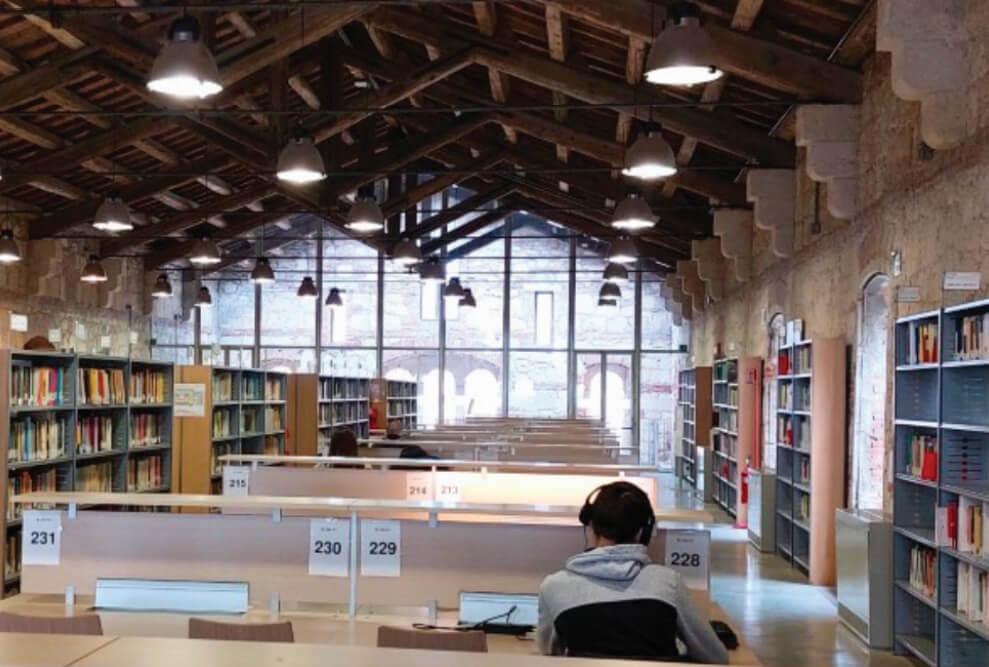
The University of Verona Libraries manage critical teaching and learning services and resources at all levels and offer study spaces for extended hours. The highly qualified library staff support research performance in the various disciplinary fields and strive for constant improvement in response to evolving needs. In addition, the library organizes courses, training, and events to promote the technological, economic, and social innovation of the community as outlined in the university’s Third Mission.
Information about University of Verona: https://www.univr.it/it/univerona-in-cifre
Achieving success through smart adoption of new technology
The University of Verona, like many other academic institutions, experienced significant challenges in managing course materials and providing academic staff and students with seamless access to library resources. Academic staff had to go through painstaking and inefficient processes, citations were often inaccurate, and students had difficulties in finding resources. As a result, library staff had to invest a lot of effort in ongoing manual processes to ensure adequate support for users. This case study explores how the adoption of the Ex Libris Leganto course resource list solution has revolutionized the management of course materials, significantly improving workflows and providing easy access to these resources.
Inefficient, manual processes that required a change
Before the implementation of Leganto, academic staff had to manually enter the lists of resources required for their courses into the Syllabus system. Not all academic staff included resource lists in the syllabus, causing gaps in study materials. Furthermore, citation information was often incomplete or inaccurate.
To find course resources, students had to copy the citation information into the library discovery system, often introducing further inaccuracies that made it difficult to obtain the resources.
Library staff had to carry out manual checks throughout the year for the identification and purchase of study materials. This asynchronous process required significant time and effort.
Integrating the library with the learning space
The University of Verona adopted Ex Libris Leganto in 2020 with the aim of eliminating inefficiencies and improving access to course resources. The initial implementation only included the integration of Leganto with Moodle, without any customizations or further integrations.
Initial studies by the library following the implementation showed that academic staff continued to enter the resource lists manually into the syllabus. In cooperation with the University IT, Leganto was integrated also with the new syllabus system, which was introduced in 2021. This integration has greatly simplified the process for academic staff: Staff now activate the resource list through their learning dashboard as part of compiling the syllabus, without any duplicate entries of citation information. Additionally, students access course resources directly from within course web pages.
An evident improvement
The implementation of Leganto has brought considerable improvements for students, academic staff, and librarians.
- With a seamless integration between the course resource lists and the library resources, the quality and completeness of citation information has been greatly improved. Reading lists and materials are now visible directly on the course web pages, streamlining access for students.
- The Leganto user-friendly interface made the adoption of the tool easy for academic staff, students, and librarians. The integration of Leganto with the Syllabus system eliminated duplicate entries of resource lists and simplified processes for academic staff. The collaboration between librarians and academic staff has improved significantly, ensuring accurate and complete course resource information and availability, updated in real time.
- The university has seen a notable increase in the use of library resources by both academic staff and students.
Conclusion
The adoption of Ex Libris Leganto, supported by the Quality
Control Unit of the University of Verona, has led to significant improvements in workflows and streamlined access to the University library resources.
By harnessing Leganto, the library has eliminated inefficiencies, simplified processes, and promoted more effective communication between all players involved in teaching and learning. Due to Leganto’s integration with the syllabus system and with Moodle, the library has seen a significant increase in the use of library resources.