


Scaling Metadata for Growing Digital Collections
Metadata has always been the foundation of successful digital collections. It enables discovery, provides context, supports accessibility, and helps researchers connect with materials that might otherwise remain hidden. Whether a library is managing photographs, manuscripts, oral histories, archival records, maps, or audiovisual collections, metadata is what transforms digital files into meaningful, searchable resources.
Yet, much of it remains invisible, trapped behind manual cataloging, incomplete metadata, and limited discovery tools. As Wolfgang Mayer, Head of Content & Data at Vienna University Library, explains: “Most of the collections we receive from faculty members have metadata quality that is very, very low…”
For librarians, creating and maintaining metadata has become one of the most significant challenges in digital collection management.
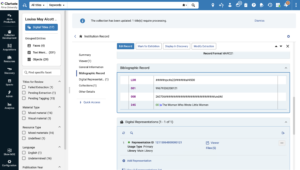 Bibliographic record before metadata enrichment
As libraries continue to digitize unique and valuable materials like photographs, manuscripts, audiovisual materials, and archival records, the volume of content grows far faster than the resources available to describe it. Keeping metadata complete, consistent, and up to date across expanding digital collections has become one of the biggest challenges facing libraries today. The result is a growing gap between what libraries hold and what users can actually discover.
For many institutions, the challenge is no longer collecting or digitizing content. The challenge is making that content visible.
The metadata bottleneck
Creating metadata is highly specialized work. It requires subject expertise, consistency, knowledge of cataloging standards, and careful attention to detail. While this expertise is essential, many metadata workflows still involve repetitive tasks that can consume significant amounts of staff time.
Describing image collections, identifying entities, generating keywords, creating subject access points, and correcting incomplete records can require hours of manual effort. When multiplied across thousands or even millions of digital assets, the workload quickly becomes difficult to sustain.
At the same time, researchers increasingly expect seamless digital discovery experiences. They want to search across collections, uncover relationships between materials, and access content that is richly described and easy to navigate. Libraries are therefore under pressure to improve metadata quality while also processing larger volumes of content.
This is where AI-assisted metadata enrichment can make a meaningful difference.
Moving beyond manual metadata creation
Metadata enrichment uses artificial intelligence to analyze digital content and generate additional descriptive information that support cataloging and discovery. Rather than requiring catalogers to start every record from scratch, librarians and archivists can review, refine, and approve AI-generated suggestions. By reducing repetitive manual work, it helps institutions enrich more collections while maintaining the quality and consistency that researchers rely on.
Professional expertise remains at the center of metadata creation, while AI helps reduce repetitive work and supports more sustainable workflows.
By automating repetitive elements of metadata creation, libraries can focus their attention on higher-value activities such as collection development, contextual interpretation, preservation planning, outreach initiatives, and quality control.
For collections that contain large numbers of images or non-textual materials, the benefits can be particularly significant. AI can help identify entities, generate descriptive metadata, surface contextual information, and support bulk enrichment workflows that would otherwise require extensive manual effort. These capabilities help teams process larger collections while maintaining professional oversight and institutional standards.
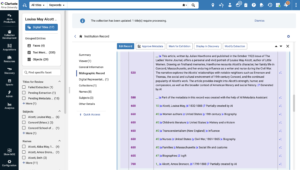 Bibliographic record after metadata enrichment
Improving quality and consistency
However, the benefits extend well beyond efficiency and speed. Metadata enrichment delivers value in consistency across collections, surface additional context, and enhance the discoverability of digital assets.
Metadata created over many years frequently reflects changing standards, varying workflows, and different cataloging practices. As collections grow, maintaining consistency can become increasingly difficult.

 Before and after metadata enrichment, shown in Primo
AI-assisted enrichment can help identify opportunities to standardize descriptions, apply consistent terminology, and enhance records that may contain limited information. When implemented thoughtfully, enrichment workflows can contribute to more uniform metadata across collections while preserving the professional judgment of library staff.
More consistent metadata improves discovery by providing stronger connections between related resources. Researchers benefit from richer descriptions, improved search results, and additional contextual information that helps them understand collection content more effectively.
In many cases, metadata enrichment can also reveal relationships that were previously difficult to identify, helping libraries expose valuable content that might otherwise remain buried within digital repositories.
For institutions managing growing collections, these improvements can have a meaningful impact. Teams can spend less time on repetitive tasks and more time focusing on collection development, preservation, outreach, and other high-value activities that require professional expertise.
Sustainable workflows for growing collections
Most libraries around the world are facing the same reality: digital collections continue to grow, while staffing and budgets often remain flat. The issue is rarely a lack of content, but limited resources that help this content surface. Therefore, sustainable workflows are becoming just as important as rich metadata itself.
Responsible AI offers one way forward.
When implemented with transparency and human oversight, AI-assisted metadata enrichment can help institutions process larger volumes of content while preserving the expertise, accountability and quality standards that define library metadata practice. Human expertise remains essential, but technology can help remove some of the repetitive work that slows workflows and contributes to growing backlogs.
The Specto approach
This is the mission behind Specto, Clarivate’s AI-powered digital collection platform. Build on the Alma ecosystem, its AI-assisted metadata enrichment capabilities help libraries improve metadata quality, streamline collection workflows, and prepare digital collections for better discovery, while ensuring every AI-generated suggestion is reviewed and approved by staff before it becomes part of the collection record.
As digital collections continue to expand, libraries need solutions that help them scale access without scaling workload. Sustainable metadata workflows are becoming just as important as metadata itself.
By combining AI-assisted enrichment with professional oversight, libraries can improve discoverability, reduce backlogs, and unlock greater value from their collections, helping them better support research, teaching, preservation, and public engagement.
To learn more about how Specto helps libraries streamline metadata workflows and improve discoverability, visit the Specto product page or request a demo.