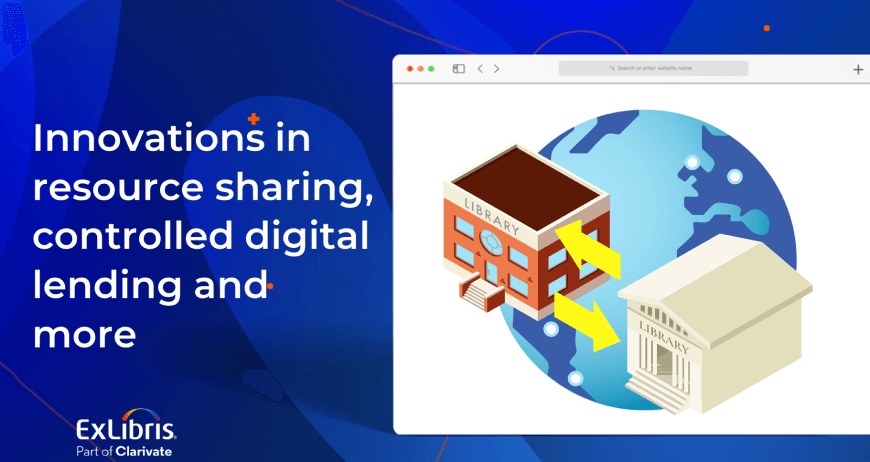



Are you seeing the full picture of your interlibrary loan requests?
Across academic libraries, resource sharing requests appear to be declining. The picture is more complex. When workflows are fragmented or difficult to use, users may abandon requests before completing them. The underlying demand remains, but it becomes harder to track.
Researchers and students expect to move from discovery to access with minimal interruption. When those steps are disconnected, engagement drops and collections become less visible.
Libraries are rethinking access
At first glance, lower interlibrary loan (ILL) numbers can suggest declining demand. Experiences at the University of Arizona Libraries, Virginia Commonwealth University and the University of Central Florida point to a different explanation: fewer requests often reflect barriers in the request process rather than reduced need. When users must:
- navigate multiple systems
- complete separate forms
- interpret unclear availability or delivery timelines
… many choose not to continue.
The absence of a request does not indicate satisfaction. It often points to friction and frustration. For librarians working to maximize the value of collections and services, this raises an important question: How many user requests go unmet because the path to access is too complex?
Some libraries are rethinking their resource-sharing patterns and how resource sharing fits into the user experience. Instead of treating it as a back-end function, they are bringing it into discovery and simplifying the process.
From separate workflows to a unified user experience
Libraries using Rapido, a resource sharing solution adopted by more than 900 institutions worldwide, allow users to request materials at the moment of discovery, without leaving the interface. This change has practical effects:
- The research journey continues without interruption
- Users do not need to re-enter information or switch systems
- Requesting feels consistent with other digital experiences
As Loftan Hooker, Head of Access Services, Virginia Commonwealth University says, “Users search, they find an item, they can request it right there in the same interface.” For libraries, this is more than a usability improvement. It affects behavior by making it easier for users to act on what they find.
Transparency builds trust
Transparency is a consistent concern in interlibrary loan workflows. When users can clearly see:
1. delivery timelines
2. lending conditions
3. request status
… they are better able to make decisions and are more certain about the process.
Kristine Shrauger, Head of Document Delivery and Resource Sharing at the University of Central Florida, describes the impact: “There’s transparency through the whole request process. The patron can see exactly what’s going on. So, we’ve had less phone calls, less emails asking, ‘what’s the status of my request?’”
This reflects broader expectations shaped by other digital services, where users track progress and receive updates in real time. When library systems align with these expectations, resource sharing feels like a natural extension of discovery.
Resource sharing as a strategic access layer
A broader shift is also underway. Resource sharing is no longer just a supporting service. It is becoming part of how access is delivered.
When discovery, requesting and fulfillment are connected:
- users experience a single, coherent process
- libraries extend access beyond local collections
- demand and usage data become more complete
Modernizing resource sharing is not only a technical change. It is a decision about how the library provides access, now and in the future.
This white paper offers a closer look at how peer institutions are redesigning resource sharing and what those changes mean in practice. It is about removing friction and delivering the intuitive experience your users already expect. Download the whitepaper today to see how your peers are turning resource sharing into a driver of access, engagement and impact.