





Share resources, preserve autonomy
With the Rapido Consortial Borrowing resource sharing platform, state–wide library systems and consortia simplify resource-sharing processes for both staff and users, enabling access to the system’s pool of resources while preserving each library’s unique workflows.

Rapido Consortial Borrowing


Adapt to today’s user expectations
Users request items in a few clicks using the interface they’re already familiar with.
Rapido Consortial Borrowing instantly displays different borrowing options based on the user’s search, provides request tracking and integrates with the library’s discovery tool or Central Request Interface.

Rapido Consortial Borrowing
Adapt to today’s user expectations
Rapido Consortial Borrowing instantly displays different borrowing options based on the user’s search, provides request tracking and integrates with the library’s discovery tool or Central Request Interface.
Latest News & Blog
















“From my perspective, I think it's the the impact that we've seen since the two academic semesters that we've been using it. It's our increase in borrowing request has gone up 25% to 28%.”
Paul Whiting, Head of User, Access and Resource Services University at Buffalo


“The university has an overarching aim of connecting globally, and Rapido helps us achieve that."
Stacey Brown Nottingham Trent University

“Thank you to the Clarivate team for leading and supporting the UNE Library’s implementation of Rapido!”
Rebecca Higgins University of New England

“Sourcing and filling each request in Rapido takes few steps compared to the multiple steps involved with our old system”
Roshan Thapa Charles Sturt University
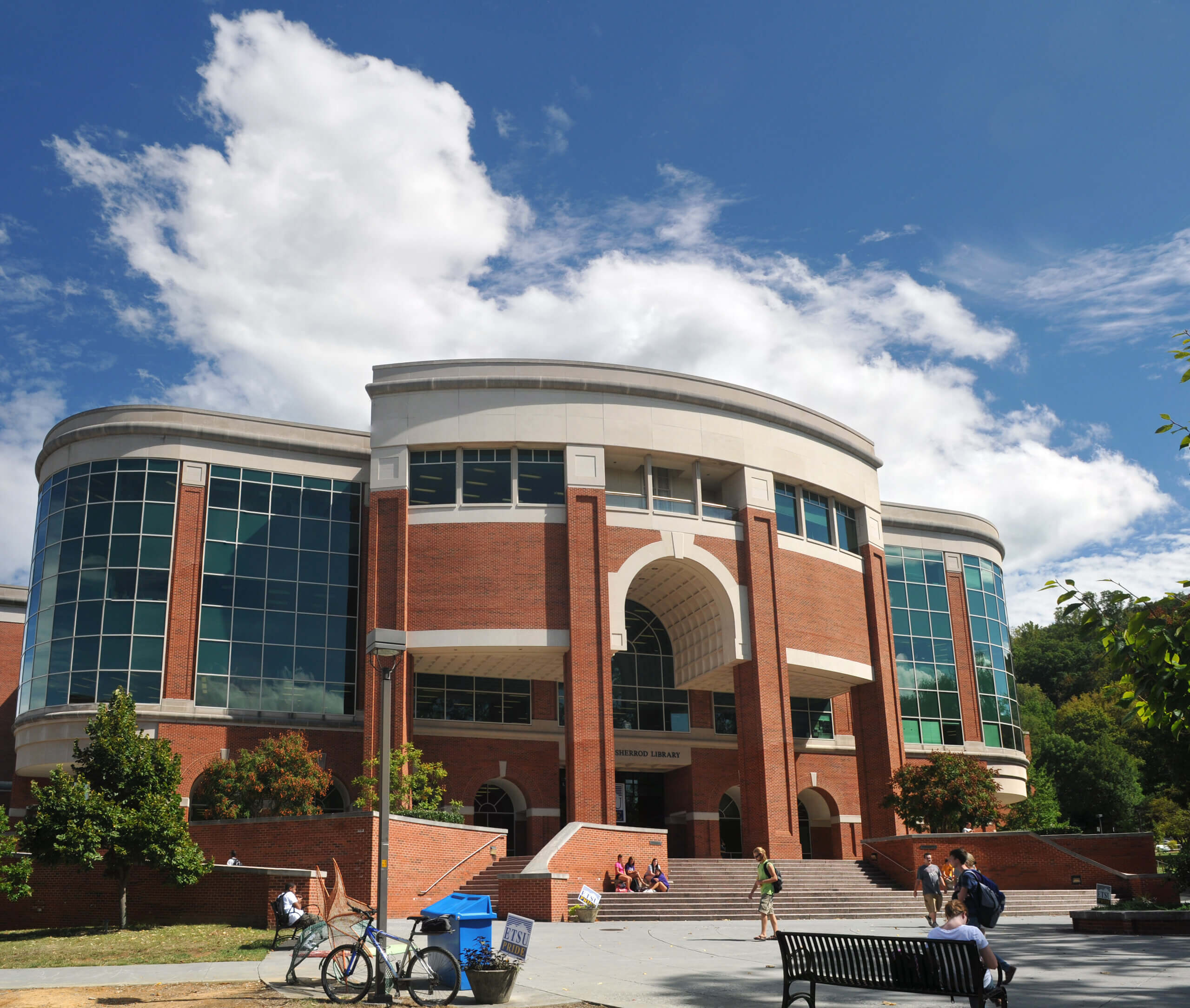
“[Rapido] makes the process as seamless as accessing items in the library’s own collection.”

Jennifer Young East Tennessee State University

"With Rapido, requests arrive in a more timely manner, and we’ve reduced our price per item."
Peggy Glatthaar Florida Gulf Coast University
“We saw a 300% usage increase, but we didn't feel that as a staff team.”

Heather Cripps University of Derby
"Users go to Primo, find the article, and make the request right there."
Jane Campbell St Olaf College
"It has saved so much time and effort now that we have a cloud-based system."
Molly Beisler University of Nevada - Reno
"Requests [are processed] directly, without any intervention needed by ILL staff."

Rachel Watters University of Wisconsin-Madison Library
"Now, students go straight to Primo, expand their results and get their materials"

Swetta Abeyta Saint Mary's College of California
"We want to ensure that our patrons get the right materials for their studies as quickly as possible"

Christopher Lee California State University System

"Rapido brings resource sharing to student searches, and they don’t have to do anything else"
Matt Cox University of Derby

“We've seen higher engagement in submissions, and can see the better user experience in those figures.”

Dr Rachel Schulkins University of Liverpool

"Rapido brought circulation and ILL staff into a closer working relationship."
Rachel Watters, Director of Resource Sharing University of Wisconsin-Madison

"Centralizing resource sharing through one platform gave Brandeis a better experience while lowering the administration burden."

Mark Paris Brandeis University

Taking Resource Sharing to the Next Level with Rapido
Peta Hopkins, Jessie Donaghey, Sarah Fredline Bond University
Hear how Rapido meets the vision for resource sharing for some leading librarians
Mark Parris, Curran Riley, Dan Taylor Brandeis University, University of Wisconsin-Madison, Ithaca College,
Librarians from Brandeis University and Ithaca College talk about leaving their previous resource sharing systems and moving to Rapido.
Mark Paris, Dan Taylor Brandeis University, Ithaca College
How Rapido works at a large institute with 13 campuses and part of the big ten group of libraries.
Katie Sanders Library Systems Administrator, University of Wisconsin-Madison

Turning resource sharing into a streamlined, user-friendly process helped benefit staff and patrons while reducing Ithaca College's costs.
Dan Taylor Library Systems Specialist, Ithaca College
Our team of experts looks forward to hearing from you
Ex Libris Webinars

What’s New in Primo – Q4 2026


Library Open Workflows (2026 Roadmap Webinar Series)

AI in Practice: How Academic Libraries Are Transforming Core...

Effective email marketing strategies for libraries

Enhancing Provider Collaboration: Clarivate Support Workflow...
What’s New in Alma Authority Control Rules – Rec...

Reimagining digital collections for the next generation of l...

The New Physical Items Experience in Alma (2026 Roadmap Webi...

What’s New with Primo – Q3 2026

Esploro-April-June 2026 Release Webinar

Esploro-January-March 2026 Release Webinar

Creating Local Subject Areas in Esploro
Progress Details for Bulk Jobs and Job Management in Alma (2...

Content Updates: What’s New and What’s Next

Rialto Release Education Session – May 2026

The Linked Open Data Editor for BIBFRAME – recent deve...
New developments in physical fulfillment in Alma (2026 Roadm...

Secure, Stable, and Scalable: Clarivate Private Cloud for Ex...

Understanding the Ex Libris Knowledgebase Ecosystem and unve...
Smarter Resource Sharing. Faster Access.
What’s New with Primo – Q2 2026

Provider Relations 2025 roadmap: Enhancing Content Provider ...

Unveiling the New Ex Libris Provider Platform – A Webi...

Unveiling Supply Chain workflows, the new “Manifest” initiat...
Getting the Most Out of Customer Care – Ex Libris Prod...

Physical Holdings retention in Alma (2026 Roadmap Webinar Se...

Rialto Release Customer Education Session
The Linked Open Data Editor for BIBFRAME (2026 Roadmap Webin...

AI based tools in Primo VE NDE (2026 Roadmap Webinar Series)

Customized Repository Search Bibliographic Indexes (2026 Roa...
Our Services

Services

Services

Services

Services

Full integration is available for Vega Discover and Primo VE, providing a “few-clicks” request experience within the discovery interface. If a library’s discovery interface does not fully integrate with Rapido Consortial Borrowing, a redirection to the Central Request Interface can be set up, offering users a simple way to place their requests.
Rapido Consortial Borrowing integrates with any library system. There are three levels of support for staff side use of Rapido Consortial Borrowing, depending on the local Integrated Library System used. for libraries using Alma, Polaris, and Sierra, Rapido Consortial Borrowing is integrated directly into the staff interface and workflows for each system.
Rapido Consortial Borrowing will provide APIs that will allow third-parties to integrate the service directly into their staff interfaces and workflows and end user interfaces. APIs will be available to third-party vendors and we will maintain a list of vendors that successfully make use of it.
For vendors that do not have direct integration or API support, their libraries can manage resource-sharing requests through the Rapido Workflow Tool, a standalone fulfillment tool that staff log into.
Both returnables and non-returnables. Depending on the pods a given consortium decides to join, libraries can either share resources among the consortia members – most often returnables – or extend their access to additional resources such as non-returnables by joining other pods.
Rapido Consortial Borrowing is tailored for consortia using independent ILS. It can integrate with and connects the individual libraries’ ILS and discovery layers and operates within the closed circle of the consortia. There are options for individual consortia members to access external Rapido pods for returnables and non-returnables, allowing them to re-route requests that cannot be filled within the Rapido Consortial Borrowing circle to a broader set of libraries.
Rapido Consortial Borrowing builds on the Rapido foundations by introducing a “2026-ready” service that meets the evolving needs of closely-knit resource sharing consortia. It respects established workflows and relationships while expanding capabilities for consortial resource sharing beyond traditional limitations.
A simplified borrowing tool for libraries that do not use Primo VE or Vega Discover as their discovery system. When an item isn’t available locally, patrons are redirected to this interface to request it from the community with just a few clicks.
Rapido Consortial Borrowing will be available for implementation by the start of 2026. Contact us today to start a discussion around the implementation of Rapido Consortial Borrowing.